Two-wheeler insurance is a contract between you and an insurance company that provides financial protection against losses from accidents, theft, third-party liability, natural disasters, and fire involving your motorcycle, scooter, or moped. Under the Motor Vehicles Act, 1988, every two-wheeler operating on Indian roads must carry at least a valid third-party (TP) insurance policy. Riding without it is a criminal offence punishable by a fine of ₹2,000 for a first offence and ₹4,000 for subsequent offences, plus potential imprisonment.
India is home to the world's largest fleet of two-wheelers — over 32 crore registered motorcycles and scooters as of 2025. From daily commuters in Mumbai to long-distance tourers on Royal Enfields, from delivery riders in Tier-2 cities to students on gearless scooters, two-wheelers are the backbone of Indian mobility. Yet a staggering proportion remain either uninsured or underinsured, leaving riders and their families financially exposed after accidents.
Types of Two-Wheeler Insurance in India
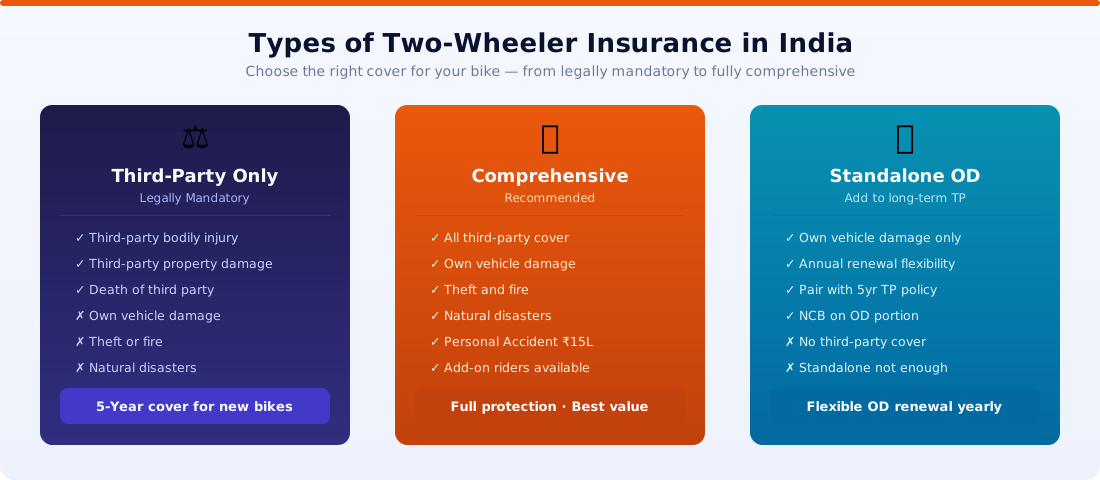
IRDAI recognises three broad categories of motor insurance for two-wheelers:
1. Third-Party (TP) Only Insurance
Legally mandatory. Third-party insurance covers bodily injury, death, or property damage caused to a third party in an accident involving your bike. It does not cover damage to your own vehicle. For new two-wheelers purchased after September 2018, IRDAI mandates a five-year bundled TP policy upfront. For older bikes renewing annually, a one-year TP policy satisfies the legal requirement.
2. Comprehensive (Package) Insurance
Strongly recommended. A comprehensive policy bundles third-party liability with own-damage (OD) cover. Own-damage cover pays for repairs or replacement of your bike if damaged in an accident, stolen, destroyed by fire, or damaged by natural disasters such as floods, cyclones, or earthquakes. It also includes compulsory Personal Accident (PA) cover of ₹15 lakh for the owner-driver. Comprehensive policies can be customised with a wide range of add-on riders.
3. Standalone Own-Damage (OD) Policy
Introduced by IRDAI in 2019, the standalone OD policy covers only own-vehicle damage and must be purchased alongside a separate long-term TP policy. This structure allows bike owners who bought a 5-year TP policy to shop for competitive OD cover every year without being locked into one insurer for both components. The No-Claim Bonus (NCB) accumulates on the OD portion, giving claim-free riders significant annual discounts.
The IRDAI Mandate: Five-Year TP is Compulsory for New Bikes
Following a Supreme Court directive in 2018, IRDAI required all new two-wheelers sold from 1 September 2018 to be covered by a five-year third-party insurance policy purchased at the point of sale. Dealers facilitate this cover as part of the on-road price. The rationale is simple: short-term TP policies lapse and riders forget to renew, leaving accident victims without recourse to compensation.
The five-year TP mandate applies only to third-party cover. Own-damage cover can still be renewed annually, giving riders the flexibility to switch OD insurers for better pricing or claims service each year. Just as car owners must understand the TP-vs-comprehensive split, two-wheeler owners benefit from knowing their OD options at renewal.
Understanding IDV and NCB
Insured Declared Value (IDV)
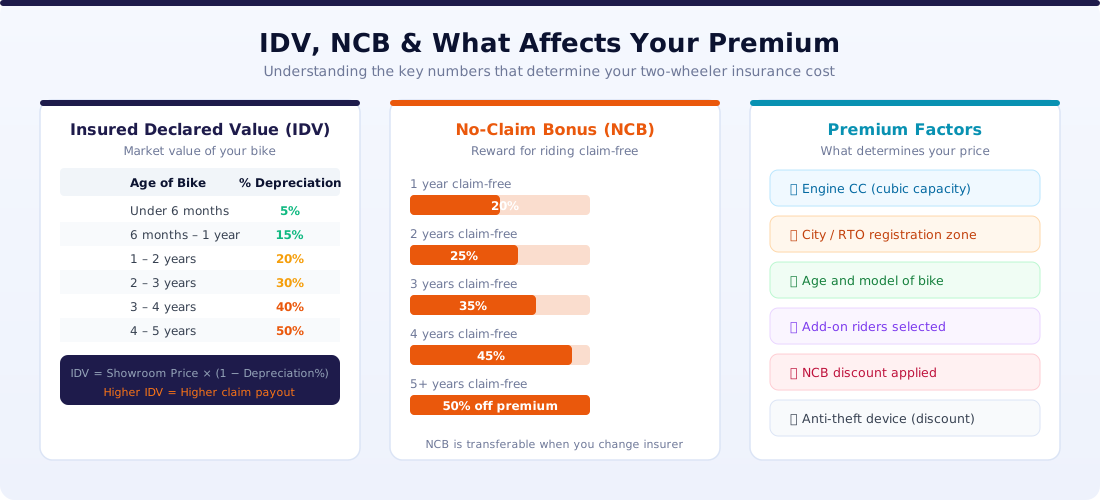
IDV is the maximum sum an insurer will pay in the event of total loss or theft of your bike — essentially its current market value minus age-based depreciation. A brand-new bike carries the highest IDV; a five-year-old machine might carry only 50% of its original value. Why IDV matters: a low IDV means a lower premium but a smaller payout if your bike is stolen or written off. Riders of premium bikes should always opt for a slightly higher IDV at renewal to avoid being undercompensated at claim time.
No-Claim Bonus (NCB)
NCB is a cumulative discount on your OD premium for every claim-free year — starting at 20% after one year and escalating to 50% after five consecutive claim-free years, cutting your OD premium in half. NCB is earned by you, not the bike, which means you can transfer it to a new vehicle or a new insurer. It is one of the most valuable financial benefits of riding carefully; losing it to a small claim you could have paid out of pocket is often a poor trade-off. Similar NCB mechanics apply to electric vehicle insurance — another reason to ride carefully regardless of fuel type.
Key Add-On Riders Worth Considering
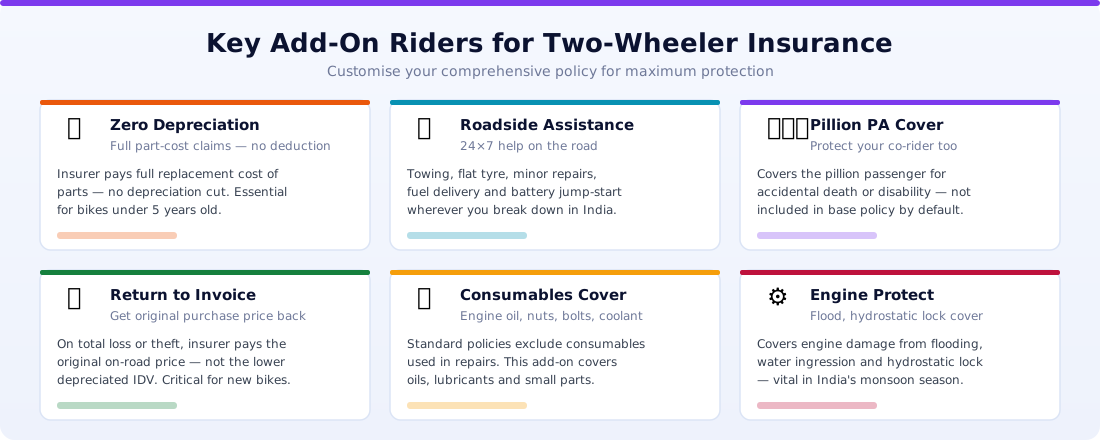
Zero Depreciation (Nil Dep): Eliminates depreciation deductions on parts at claim time — you receive the full replacement cost of damaged components. Essential for new or near-new bikes.
Roadside Assistance (RSA): 24×7 emergency help for breakdowns anywhere in India — towing, minor on-spot repairs, flat tyre help, fuel delivery, and battery jump-start.
Pillion Rider PA Cover: Extends Personal Accident cover to the pillion passenger. The base ₹15 lakh PA is for the owner-driver only; a separate add-on is required for co-riders.
Return to Invoice (RTI): On total loss or theft, pays out the original on-road invoice price rather than the lower IDV. Critical for bikes purchased within the past two years.
Consumables Cover: Covers nuts, bolts, engine oil, brake fluid and other consumables used during accidental repairs — normally excluded from standard policies.
Engine and Gearbox Protect: Covers internal engine damage caused by water ingression and hydrostatic lock — a vital add-on during India's monsoon season in flood-prone cities.
How the Claims Process Works
For accidents: immediately inform your insurer, file an FIR if third parties are involved, and take the bike to a network garage for cashless repair authorisation. For theft: file an FIR immediately, inform the insurer within 48 hours, and provide the keys, RC, and charge sheet once the police investigation closes. Most insurers settle theft claims within 30–45 days.
Cashless claims are only available at the insurer's empanelled network garages. Reimbursement claims allow you to get repairs done anywhere and submit the bills — you receive payment (minus depreciation unless you have zero-dep cover) within 7–14 working days. IRDAI mandates insurers to settle or reject claims within 30 days of receiving all documents.
Premium: What Does Two-Wheeler Insurance Cost in India?
TP premium rates are fixed by IRDAI. For FY 2025-26, the annual TP premium ranges from ₹538 for bikes up to 75cc to ₹2,804 for bikes above 350cc. OD premium varies by insurer, IDV, add-ons chosen, and applicable NCB. A comprehensive policy for a popular 150cc commuter like a Hero Splendor or Honda Activa typically costs ₹2,500–₹5,000 annually — roughly the price of one tank of petrol per month. Electric two-wheelers attract OD premiums 10–15% higher than ICE equivalents, reflecting the higher battery replacement cost.
The Regulatory Framework: IRDAI & the Motor Vehicles Act
The Insurance Regulatory and Development Authority of India (IRDAI) governs all motor insurance products. Key regulations bike owners should know: the Motor Vehicles Act 1988 (mandating TP cover), the Motor Vehicles (Amendment) Act 2019 (raising third-party accident compensation limits and introducing ₹5 lakh interim relief for road accident victims), and IRDAI's bundled motor policy circular of 2018 (mandating 5-year TP cover for new vehicles).
Disputes between policyholders and insurers are handled by the Insurance Ombudsman — 17 offices across India offering free, fast-track resolution for claims of up to ₹30 lakh. If your claim has been wrongly rejected or delayed beyond 30 days, filing a complaint with the Ombudsman is your fastest route to redress.
Why Two-Wheeler Insurance is More Than Just a Legal Box to Tick
Third-party cover is the legal floor — not the ceiling. Riders who rely on TP-only cover are fully exposed when their own bike is stolen, totalled in a pothole, or submerged in a flash flood. A comprehensive policy with the right add-ons eliminates that exposure for typically less than ₹500 a month. The specific covers that matter most for two-wheelers include:
Own Damage (OD) Cover — pays for repairs to your bike after accidents, including single-vehicle accidents not involving a third party.
Theft Cover — pays out IDV (or invoice value with RTI) if your bike is stolen and unrecovered within 90 days.
Personal Accident Cover (₹15 lakh) — mandatory for the owner-driver; pays a lump sum on accidental death or permanent total disability.
Natural Calamity Cover — protects against flood, cyclone, earthquake and landslide damage — increasingly critical in India's changing climate.
Fire and Explosion Cover — covers bikes destroyed in vehicle fires, including electrical fires — a growing concern with older two-wheelers.
Zero Depreciation Rider — ensures 100% of parts cost is paid at claim time, not the depreciated book value.
FAQs about Two-Wheeler Insurance in India
Is two-wheeler insurance mandatory in India?
Yes. The Motor Vehicles Act, 1988 makes it illegal to ride any two-wheeler on a public road without at least a valid third-party insurance policy. For new bikes bought after September 2018, IRDAI requires a five-year TP policy purchased at the time of sale. Riding uninsured can result in a fine of ₹2,000–₹4,000 and potential licence suspension.
What is the difference between third-party and comprehensive bike insurance?
Third-party (TP) insurance covers liability to other people and their property — it does not pay for damage to your own bike. Comprehensive insurance adds own-damage cover on top of the mandatory TP cover, protecting your bike against accidents, theft, fire, and natural disasters. Comprehensive policies also include ₹15 lakh Personal Accident cover for the owner-driver.
How is IDV calculated for a two-wheeler?
IDV (Insured Declared Value) is the manufacturer's listed selling price of the bike minus depreciation based on its age — ranging from 5% for a bike under 6 months old to 50% for a bike between 4–5 years old. IDV is the maximum amount the insurer will pay in case of total loss or theft. You can usually increase IDV slightly by paying a marginally higher premium — worth doing for premium or newer bikes.
What is No-Claim Bonus (NCB) on bike insurance?
NCB is a discount on your own-damage (OD) premium for each year you don't file a claim. It starts at 20% after one claim-free year and rises to 50% after five consecutive claim-free years. NCB belongs to you — not the bike — so you can transfer it to a new vehicle or a new insurer. An NCB certificate from your current insurer is all you need to carry the discount forward.
Which add-ons are most important for a new bike?
For a new two-wheeler, the most valuable add-ons are Zero Depreciation (ensures full replacement cost of parts at claim time), Return to Invoice (pays the original on-road price on total loss or theft), and Roadside Assistance (24×7 breakdown help). In flood-prone cities, Engine and Gearbox Protect is also strongly recommended. These four add-ons together typically add only ₹500–₹1,500 to the annual premium.
Where can I get specialist two-wheeler insurance in India?
TropoGo offers tailored two-wheeler and bike insurance policies covering third-party liability, comprehensive own-damage, zero depreciation, and roadside assistance — with IRDAI-compliant policies, instant digital issuance, and dedicated claims support. Get your two-wheeler insurance quote today and ride with complete confidence.
Ready to Ride? Get the Right Two-Wheeler Cover.
TropoGo's specialist two-wheeler insurance desk helps riders — from daily commuters to long-distance tourers and delivery professionals — find IRDAI-compliant policies with the right cover at the right premium. Get your quote in minutes and stay protected on every ride.