What is Harvester Insurance and Why It’s Important for Farmers
12 May 2026 | 7 min read
India’s Farmers Invest ₹25–50 Lakh in a Combine. Is Yours Protected?
Fire, flood, theft and breakdown cover for combine harvesters, rice combiners and tractor-mounted reapers — built for Indian farmers and Custom Hiring Centres.
India harvests roughly 330 million tonnes of foodgrains every year. In Punjab alone, the April–May wheat harvest moves at a pace that would have been unimaginable a generation ago — not because the fields have shrunk, but because the machines doing the work have become extraordinarily capable. A single self-propelled combine harvester can cut, thresh, and clean ten to fifteen acres of wheat in a single day. The same job would take more than 200 manual labourers.
Those machines cost between ₹25 lakh and ₹50 lakh each. Many are bought on bank loans. Most are operated from April to November, moving from state to state — Punjab and Haryana in spring, Andhra Pradesh and Odisha in the kharif season, Rajasthan for the mustard crop. And most of them operate without any insurance at all.
That is a staggering exposure. A fire caused by crop dust igniting against a hot engine, a road accident on the flatbed truck carrying the machine between states, a flash flood in a low-lying paddy field, or a catastrophic engine failure at peak harvest time — any of these can cost a farmer or Custom Hiring Centre (CHC) operator an entire season's earnings, plus the loan repayments on a machine that no longer works.
Harvester insurance exists to close that gap. This guide explains what it is, what it covers, who needs it, and how it works in India's regulatory environment.
What Is a Combine Harvester?
A combine harvester (or simply "combine") is an agricultural machine that performs three operations simultaneously: reaping (cutting the standing crop), threshing (separating grain from the stalk), and winnowing (cleaning the grain of chaff). The word "combine" refers to combining these three traditionally separate processes into a single machine pass.
India's harvester fleet ranges from large, air-conditioned self-propelled combines used for wheat and paddy, to smaller tractor-mounted reaper-binders used by smallholder farmers, to specialised rice combines designed for the waterlogged paddy fields of Andhra Pradesh, Odisha and West Bengal. Each type has a different risk profile, a different value, and a different insurance requirement.
Types of Harvesters Used in India
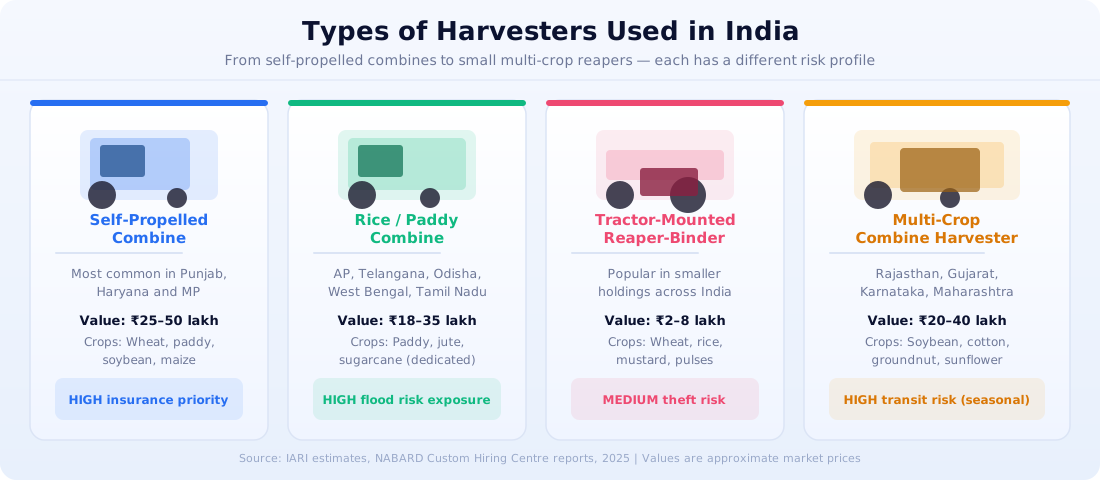
The four main categories are self-propelled combines (₹25–50 lakh, dominant in Punjab and Haryana), rice paddy combines (₹18–35 lakh, widely used in the south and east), tractor-mounted reaper-binders (₹2–8 lakh, popular with smaller farms), and multi-crop combines (₹20–40 lakh, used for soybean, cotton and groundnut in Maharashtra, Gujarat and Rajasthan). The insurance needs — and premiums — differ significantly across these categories.
India's Harvester Landscape
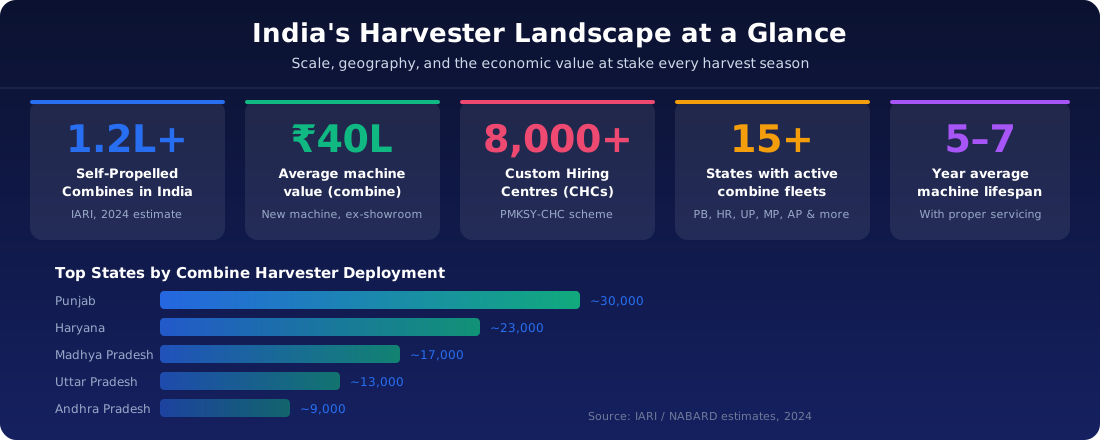
India's combine harvester fleet has grown rapidly over the past decade, driven by farm labour shortages, rural wage inflation, and active government support through the PMKSY-Custom Hiring Centre (CHC) scheme. Under this programme, FPOs (Farmer Producer Organisations), cooperatives and individual entrepreneurs receive subsidies of up to 80 percent of the machine cost to set up equipment rental centres. A CHC operator may own two to six machines worth ₹80 lakh to ₹2 crore in total — a portfolio that demands proper insurance.
The machines travel enormous distances. Punjab-based combines routinely travel 2,000 km south to harvest paddy in Andhra Pradesh between October and November. This inter-state transit — on flatbed trucks through mountain passes and coastal highways — is among the highest-risk phases of a harvester's year, and it is often completely uninsured.
Why Harvesters Face Serious Financial Risk
Fire and crop dust: Dry crop residue (bhusa) and grain dust can ignite against the hot thresher drum or exhaust. Combine fires are not rare — a single fire can destroy a ₹40 lakh machine in under 30 minutes.
Monsoon flooding: Paddy harvesters operating in low-lying fields in Andhra Pradesh, Odisha and West Bengal face real flood risk during the kharif harvest, especially when cyclone-driven rains arrive early.
Road accidents: Harvesters are transported on low-bed trailers or flatbed trucks. A trailer rollover or highway collision can write off a machine before it reaches the next state.
Theft: High-value, mobile machines parked in remote fields overnight are targets for component stripping — headers, cutter bars, and electronic control modules are particularly vulnerable.
Mechanical breakdown: Mid-harvest engine, header or thresher failure means days of lost hire income at the peak of the season, when every hour of working light counts.
What Is Harvester Insurance?
Harvester insurance is a general insurance product that covers the physical loss or damage to an agricultural harvester or combine — and related financial liabilities — arising from specified perils. In India it falls under the miscellaneous / engineering insurance category regulated by the Insurance Regulatory and Development Authority of India (IRDAI).
A well-structured policy typically covers the machine on an Insured Declared Value (IDV) basis — the current market value after depreciation — and pays for repairs or total loss replacement up to that IDV. Policies can be extended to cover the machine during transit, storage, and even for third-party liability if the harvester damages standing crops in a neighbour's field during operation.
India's Regulatory Framework for Farm Equipment Insurance
IRDAI oversees all general insurance in India, including agricultural machinery coverage. While the Pradhan Mantri Fasal Bima Yojana (PMFBY) covers crop yield loss, it does not cover the machinery used to harvest those crops. Equipment insurance is a separate, privately purchased policy — not part of any government crop insurance scheme.
Banks and NBFCs financing combine harvesters under NABARD's agricultural machinery lending programmes increasingly require borrowers to take out machine insurance as a loan condition — similar to how car loans require motor insurance. The Reserve Bank of India's priority-sector guidelines for farm equipment lending are pushing lenders to mandate coverage, creating a growing formal market for harvester insurance in India.
For CHC operators who have received government subsidy, state agriculture departments in Punjab, Haryana and Madhya Pradesh now recommend (and in some cases require) that machines be insured as a condition of subsidy disbursement.
Protect Your Harvester — Before the Season Starts
TropoGo specialises in agricultural equipment insurance for combine owners, CHC operators and FPOs across India. Get a tailored harvester insurance quote in minutes.
Why Harvester Insurance Is Essential, Not Optional
A combine harvester is not just a machine — it is a business. CHC operators, FPOs, and individual farmer-owners depend on it to generate hire income across three or four crop seasons a year. When that machine stops working — whether from fire, flood, or a broken thresher drum — the financial losses extend far beyond the repair bill. Lost hire contracts, emergency labour costs, and loan EMIs don't pause because the machine is in the workshop.
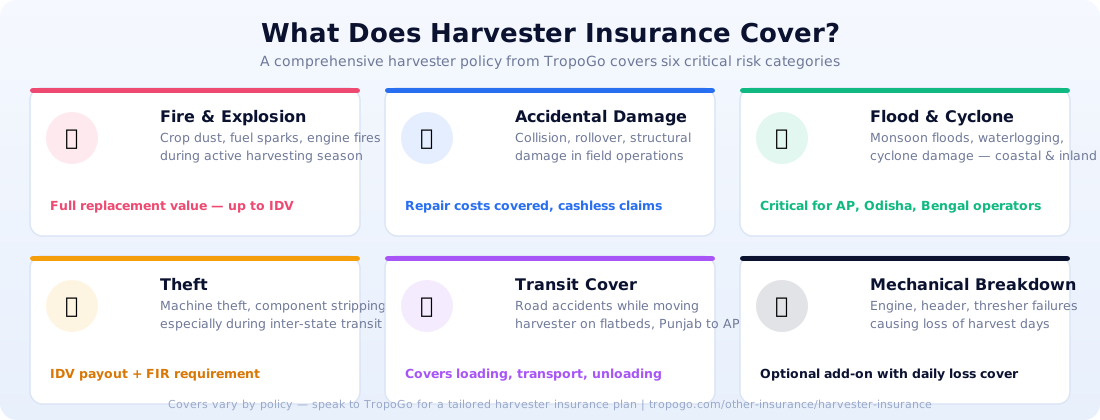
A comprehensive harvester insurance policy from TropoGo covers six distinct risk categories:
Fire and explosion cover: Protects against crop dust ignition, engine fires and electrical short-circuit fires — the most common total-loss event for combines in India. Covers up to the full IDV of the machine.
Accidental damage cover: Pays for repairs after a collision, rollover, or structural damage sustained during field operations or while the machine is being positioned.
Flood and cyclone cover: Critical for operators in Andhra Pradesh, Odisha, West Bengal and Assam. Covers damage from monsoon flooding, waterlogging and cyclone-driven debris.
Theft cover: Protects against full-machine theft or component stripping (headers, cutter bars, GPS units). Requires an FIR and IDV-based claim settlement.
Transit cover: Covers the machine while being transported on a low-bed trailer or flatbed truck — loading, unloading, and road transit across states.
Mechanical breakdown cover (add-on): An optional extension that covers sudden machine failure and, in some policies, includes a daily hire-loss allowance to compensate for working days missed during repairs.
What Does Harvester Insurance Cost?
Premiums for harvester insurance in India typically range from 0.8 to 2.5 percent of IDV per year, depending on the machine type, age, operating states, and the covers included. For a ₹40 lakh combine with fire, accidental damage, flood and transit cover, that works out to roughly ₹32,000 to ₹1,00,000 per year — a fraction of what a single fire claim or breakdown would cost.
CHC operators with multiple machines can negotiate fleet discounts. Banks financing harvester purchases can bundle insurance into the loan EMI structure, making it easier for first-time buyers to maintain consistent cover without managing a separate annual renewal.
The Outlook: Rising Mechanisation, Rising Stakes
India's farm mechanisation rate is rising steadily — from around 40 percent in 2015 to over 60 percent today, with targets to reach 75 percent by 2030. The government's SMAM (Sub-Mission on Agricultural Mechanisation) scheme continues to push CHC formation, and the emergence of FPOs as large-scale machine owners is creating a new class of institutional buyers for harvester insurance.
Digital-first insurance platforms like TropoGo are making it easier to buy, renew and claim against harvester policies without visiting a branch office — critical for operators who are often in remote fields 200 km from the nearest city. As banks tighten lending conditions and IRDAI continues to push for agricultural insurance penetration, the question is no longer whether to insure a combine — it is which policy covers all your risks.
Frequently Asked Questions — Harvester Insurance
Is there any government-backed scheme for harvester insurance in India?
There is no dedicated central government scheme specifically for harvester or combine insurance. The Pradhan Mantri Fasal Bima Yojana (PMFBY) covers crop yield loss — not the machinery. Harvester insurance is purchased through private general insurers regulated by IRDAI. However, some state governments (Punjab, Haryana, MP) recommend or require it for CHC subsidy recipients under PMKSY-CHC.
What is IDV and how is it calculated for a combine harvester?
IDV (Insured Declared Value) is the current market value of your combine after standard depreciation. A new ₹40 lakh machine might be insured at ₹40 lakh in year one, dropping to around ₹34–36 lakh by year three. IDV is the maximum amount the insurer will pay on a total-loss claim. TropoGo helps you choose the right IDV at the time of policy purchase to avoid under-insurance.
Does harvester insurance cover the machine while it is being transported between states?
Standard harvester policies cover the machine at the farm or in the field. Transit cover — for damage during road transport on flatbed trucks or low-bed trailers — is a separate extension that must be added to the policy. Given that Punjab combines travel thousands of kilometres to harvest paddy in southern India, transit cover is strongly recommended for mobile operators.
Can a Custom Hiring Centre (CHC) insure all its machines under a single policy?
Yes. CHC operators can take out a fleet policy covering multiple machines under a single annual premium. This simplifies administration, allows for volume discounts, and ensures all machines in the fleet are consistently covered regardless of which state they are operating in at the time of a claim.
What happens if my harvester breaks down mid-harvest season?
A standard accidental damage policy covers repair costs for breakdowns caused by an insured peril (fire, collision, flood). Mechanical breakdown — failure from normal wear — requires a separate mechanical breakdown add-on. Some TropoGo policies include a daily hire-loss allowance, compensating you for the income missed while the machine is being repaired during peak season.
How do I get a harvester insurance quote from TropoGo?
Visit tropogo.com/other-insurance/harvester-insurance, provide your machine type, year of purchase, current IDV estimate and the states where you operate. Our team will build a policy that covers all your seasonal risk windows — not just the field but the road, the storage yard, and everything in between.
India's combine harvesters are the backbone of its food security — and they deserve the same quality of insurance protection that a fleet truck or factory machine receives. Whether you own a single combine, run a multi-machine CHC, or represent an FPO with dozens of members sharing equipment, the right harvester insurance policy is available in India today. Don't wait until the harvest season starts — get covered before the first acre is cut.