What is Shrimp and Prawn Farming Insurance? Protecting Your Aquaculture Investment
11 May 2026 | 7 min read
India's Coastal Aquaculture — a ₹60,000 Crore Industry With Too Much at Stake
Shrimp and prawn farmers across Andhra Pradesh, West Bengal, Odisha and Gujarat invest lakhs every crop cycle — yet most remain uninsured against disease outbreaks, cyclones and floods that can wipe out an entire pond in days. Aquaculture insurance changes that.
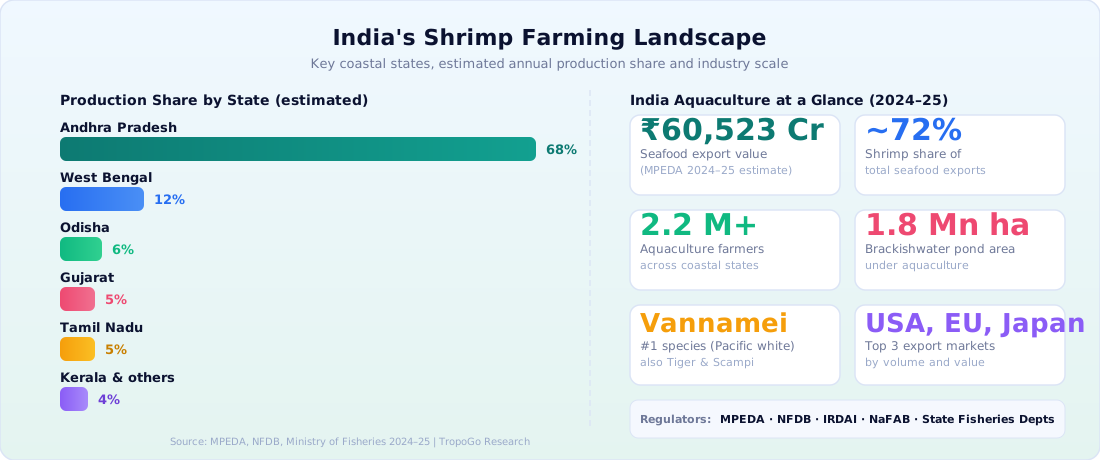
India's shrimp and prawn farming sector is one of the country's most remarkable export success stories. From the backwaters of Andhra Pradesh to the deltas of West Bengal and the creek systems of Gujarat, millions of aquaculture farmers generate close to ₹60,000 crore in seafood exports annually — with shrimp and prawns accounting for nearly 72 per cent of that figure. Yet the same coastal geography that makes these regions ideal for culture ponds also exposes farmers to cyclones, floods, salinity surges and disease outbreaks that can erase an entire crop in a matter of days.
For most small and medium shrimp farmers, a single failed crop cycle means not just a lost harvest — it means lost seed cost, feed investment, pond preparation, labour and often borrowed capital. Shrimp and prawn farming insurance is the financial safety net that turns a catastrophic loss into a recoverable setback, protecting both the farmer's livelihood and the lender's exposure. This guide explains how it works, what it covers, and why the Indian aquaculture sector cannot afford to grow without it.
What is Shrimp and Prawn Farming Insurance?
Shrimp and prawn farming insurance — broadly called aquaculture insurance — is an IRDAI-regulated product that compensates aquaculture farmers when cultured stock is lost due to insured perils before it can be harvested. Unlike crop insurance for paddy or wheat, aquaculture insurance is specifically designed for the unique risk profile of brackishwater and freshwater pond culture: rapid stock accumulation, high per-unit input cost, extreme disease sensitivity, and proximity to cyclone-prone coastlines.
Policies can be taken out by individual farmers, farmer-producer organisations (FPOs), cooperatives, or hatcheries. The sum insured is typically calculated on the basis of the expected crop value at harvest — factoring in stocking density, expected survival rate, target weight and prevailing market price for species such as Pacific white shrimp (Litopenaeus vannamei), Indian white prawn (Penaeus indicus), tiger prawn (Penaeus monodon) and freshwater scampi (Macrobrachium rosenbergii).
How Shrimp Aquaculture Works — and Where Risk Enters
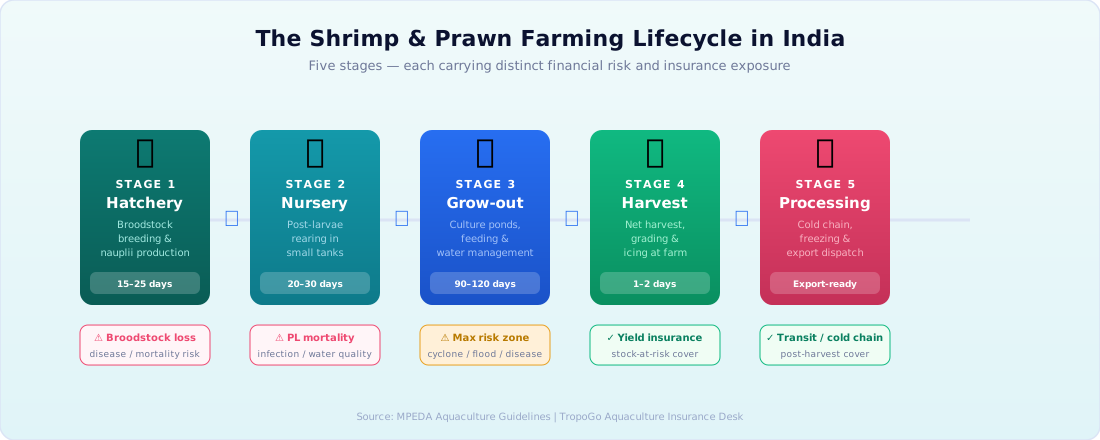
Understanding the farming lifecycle is essential to grasping why insurance is so important at each stage. The cycle begins at the hatchery, where broodstock are conditioned and post-larvae (PL) produced. PL are then raised in nursery tanks for 20–30 days before being stocked into grow-out ponds, where the bulk of the investment — feed, aerators, water management, probiotics and labour — is deployed over 90 to 120 days. Harvest and cold-chain dispatch are the final steps that convert that investment into export revenue.
Risk is not uniformly distributed across this cycle. The grow-out stage — when the largest capital outlay has already been made but the crop is not yet harvested — is the maximum exposure window. A disease outbreak at day 70 of a 110-day cycle can mean the loss of 100 per cent of input cost with zero revenue recovery. It is precisely this mismatch between invested capital and unrecoverable timing that makes aquaculture insurance fundamentally different from, say, vehicle insurance.
India's Shrimp Farming Landscape: States, Species and Scale
India is the world's largest exporter of shrimp by volume, and Andhra Pradesh alone accounts for roughly 68 per cent of domestic production — primarily through intensive and semi-intensive vannamei culture in the Krishna, Guntur, West Godavari and East Godavari districts. West Bengal's Sundarbans region is home to the country's dominant tiger prawn and scampi culture, while Odisha, Gujarat, Tamil Nadu and Kerala each have sizeable brackishwater farming sectors with distinct species mixes and risk profiles.
The dominant farmed species today is Litopenaeus vannamei — the Pacific white shrimp — which replaced the native tiger prawn as the primary culture species after 2009 due to its faster growth, higher stocking density tolerance and better feed conversion. Vannamei is also more susceptible to specific viral diseases like White Spot Syndrome Virus (WSSV) and Early Mortality Syndrome (EMS/AHPND), which has elevated the importance of disease cover in modern aquaculture insurance products.
Benefits of Aquaculture Insurance for Indian Farmers
Capital protection: Recovering seed, feed, pond prep and labour costs after a crop failure keeps the farming operation financially viable and loan accounts from going NPA.
Disaster resilience: Cyclone Michaung (2023) and Cyclone Fani (2019) caused thousands of crores in aquaculture losses in Andhra Pradesh and Odisha. Insured farmers rebuilt in one season; uninsured farmers often did not.
Credit access: Banks and NBFCs increasingly require aquaculture insurance as a condition for crop loans, particularly under the Pradhan Mantri Matsya Sampada Yojana (PMMSY) and NFDB loan products.
Export continuity: Insurance-backed farms can restart quickly after a loss, maintaining supply contracts with overseas buyers and preventing relationship ruptures.
Farmer confidence: Insured farmers invest more in better seed, feed and technology because they know a single bad season will not end their farming career.
Key Risks and Challenges in Indian Aquaculture
Disease outbreaks: WSSV, EMS/AHPND, Infectious Hypodermal and Haematopoietic Necrosis (IHHNV) and Hepatopancreatic Parvovirus (HPV) remain endemic threats. A single viral event can destroy entire pond clusters within days.
Cyclones and storm surge: Coastal Andhra Pradesh, Odisha and the Sundarbans sit in Cyclone Risk Zone V — the highest-exposure corridor in the country.
Flooding and waterlogging: Excessive rainfall dilutes pond salinity below species tolerance thresholds, triggering mass mortality without any visible disease vector.
Power cuts and equipment failure: Aerator failure in a high-stocking-density vannamei pond can cause oxygen depletion and total pond mortality within two to four hours.
Input price volatility: Shrimp feed accounts for 50–60 per cent of operating cost; a price spike combined with a market downturn can squeeze margins to zero even in a healthy crop year.
Low insurance penetration: NFDB estimates that fewer than 12 per cent of India's aquaculture farmers hold any form of crop insurance, leaving the vast majority exposed to unmitigated financial risk.
The Regulatory Framework: IRDAI, MPEDA, NFDB and NaFAB
Indian aquaculture insurance sits at the intersection of three regulatory frameworks. IRDAI (Insurance Regulatory and Development Authority of India) governs the products, premium rates and claims procedures through its agricultural and allied products guidelines. MPEDA (Marine Products Export Development Authority) sets quality and species standards that define what constitutes a commercially viable crop for insurance valuation purposes. NFDB (National Fisheries Development Board) administers subsidy schemes — including premium subsidy of up to 50 per cent for small and marginal farmers — making policies financially accessible. NaFAB (National Fisheries and Aquaculture Board, constituted under the Fisheries Act 2022) provides the overarching governance framework for aquaculture activities including insurance linkage under PMMSY.
State-level fisheries departments in Andhra Pradesh, West Bengal and Odisha additionally maintain disease surveillance networks — the data from which feeds into risk pricing for private insurers offering aquaculture products beyond government schemes.
Aquaculture Insurance — Built for Indian Shrimp and Prawn Farmers
Stock mortality, disease outbreak, cyclone, flood and equipment cover — all in one policy, IRDAI-regulated and claim-ready.
Why Insurance is the Foundation of a Viable Aquaculture Business
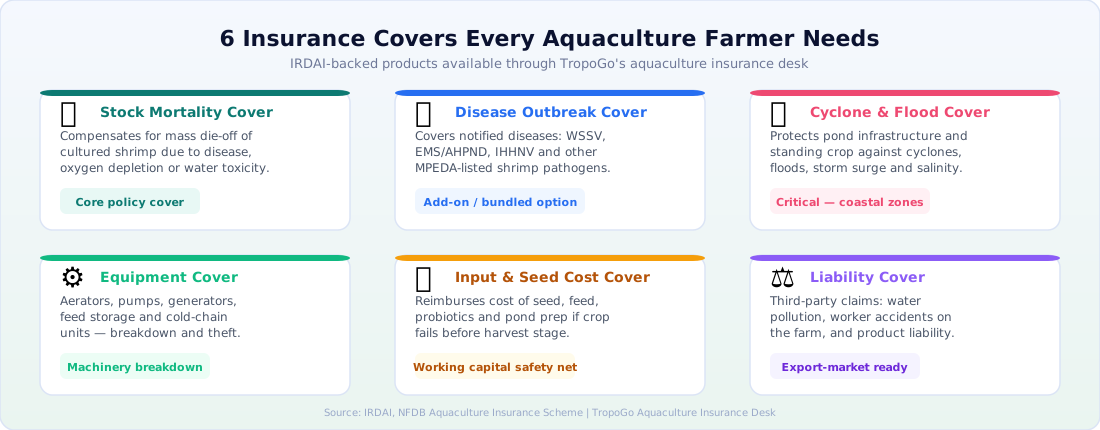
India's ₹60,000 crore seafood export industry is built on the backs of millions of small farmers, each investing ₹3–12 lakh per crop cycle per hectare in a biological process they cannot fully control. Without insurance, a single bad crop can mean financial ruin. With the right policy, the same farmer can recover, restock and rebuild within the same season. Here are the six covers every serious aquaculture farmer should carry:
Stock Mortality Cover: The core of any aquaculture policy. Compensates for the market value of cultured shrimp or prawns lost to disease, water quality deterioration or oxygen depletion. Sum insured is typically calculated on projected harvest weight at prevailing APMC or export price.
Disease Outbreak Cover: Specifically designed for notified viral and bacterial diseases — WSSV, EMS/AHPND, IHHNV and others listed by MPEDA. Triggered when disease is confirmed by an accredited laboratory test and pond depopulation is ordered by a competent authority or the farmer's veterinarian.
Cyclone and Flood Cover: Pays for crop loss caused by named cyclones, storm surge, flood inundation and salinity influx that are clearly attributable to a weather event. Infrastructure damage (bunds, sluice gates, aerators) can be added as a structure endorsement.
Equipment and Machinery Cover: Aerators account for 20–30 per cent of capital investment in an intensive vannamei farm. This cover reimburses repair or replacement costs for aerators, pumps, generators and automatic feeders lost to mechanical breakdown, electrical fault or theft.
Input Cost Cover: A working capital safety net that reimburses seed, feed, pond preparation chemicals, probiotics and labour costs if the crop is forced to be abandoned before reaching minimum market weight. Particularly valuable for farmers who finance inputs through short-term credit.
Third-Party Liability Cover: Covers claims from neighbouring farmers, fisherfolk or communities if your farm's effluent causes water pollution, fish kills in adjacent water bodies, or worker accidents on-site. Increasingly a requirement for MPEDA-registered export-linked farms.
The Outlook: A ₹1,000 Crore Market Waiting to Grow
The Indian aquaculture insurance market is at an inflection point. The Union government's push under PMMSY — with ₹20,050 crore allocated for the fisheries sector through 2024–25 — explicitly includes insurance premium subsidy as a key beneficiary intervention. Private sector insurers are introducing parametric products for cyclone and salinity events that settle within 72 hours of a trigger event, removing the documentation burden that has historically made claims difficult for small farmers. Digital aquaculture management platforms like AquaConnect are integrating insurance data feeds that will make real-time stock monitoring the basis for dynamic premium pricing by 2027.
For farmers who have already experienced a crop failure, the lesson is clear. For those who have not yet faced a catastrophic season, the question is not whether to insure — it is why they have waited this long.
What species are covered under shrimp and prawn farming insurance in India?
Most IRDAI-regulated aquaculture policies cover Pacific white shrimp (Litopenaeus vannamei), Indian white prawn (Penaeus indicus), tiger prawn (Penaeus monodon) and freshwater scampi (Macrobrachium rosenbergii). Some insurers extend cover to mud crabs and seabass under allied aquaculture endorsements. The specific species and their approved stocking densities must be declared at the time of policy inception.
How is the sum insured calculated for a shrimp farm?
The sum insured is typically based on the projected harvest value: stocked area (hectares) × stocking density (PL per hectare) × expected survival rate × target harvest weight per animal × prevailing market price per kilogram. Some policies use a simplified per-hectare sum insured based on regional averages. The farmer's actual input cost records — seed invoices, feed bills, pond rental — form the basis of claim assessment if a loss occurs before harvest.
Does the insurance cover WSSV and EMS disease outbreaks?
Yes — disease outbreak cover for White Spot Syndrome Virus (WSSV) and Early Mortality Syndrome (EMS/AHPND) is available as a standard or add-on endorsement under most aquaculture policies. A claim for disease requires confirmation by a government-accredited diagnostic laboratory (such as the MPEDA network lab or a state fisheries institute), along with a pond mortality assessment by the insurer's surveyor. Most policies require the disease to be reported within 48–72 hours of the first signs of mass mortality.
Are premium subsidies available for small shrimp farmers in India?
Yes. Under the National Fisheries Development Board (NFDB) Aquaculture Insurance Scheme, small and marginal farmers (those with up to 2 hectares of pond area) can receive a premium subsidy of up to 50 per cent, funded jointly by the central and state governments. The farmer's share of premium is typically 25 per cent, with state and central governments contributing 12.5 per cent each. Eligibility and subsidy rates vary by state — Andhra Pradesh, West Bengal and Odisha have active schemes operational for the 2025–26 crop cycle.
How quickly are aquaculture insurance claims settled?
Under IRDAI guidelines, general insurance claims must be acknowledged within 15 days and either settled or disputed within 30 days of receiving all required documents. In practice, aquaculture claims — which require pond survey, species verification and mortality assessment — often take 30–45 days for the full settlement cycle. Parametric policies being introduced by some private insurers settle cyclone and flood claims within 72 hours of a pre-agreed weather trigger being crossed, bypassing the traditional survey process entirely.
How do I get aquaculture insurance for my shrimp or prawn farm in India?
TropoGo's aquaculture insurance desk helps shrimp and prawn farmers across all coastal states find the right policy — whether a standard NFDB-scheme product with government subsidy or a private-market product with broader perils. You'll need your pond ownership or lease documents, seed stocking records, MPEDA registration (if export-linked) and a recent water quality report. Visit TropoGo Aquaculture Insurance to get a quote or speak with an aquaculture insurance specialist.
Shrimp and prawn farming is one of the most capital-intensive, risk-exposed sectors in Indian agriculture. A comprehensive aquaculture insurance policy — covering stock mortality, disease, cyclone, equipment and working capital — is not a luxury reserved for large corporate farms. It is the baseline financial protection that every pond farmer needs to operate sustainably, secure credit and build a business that can survive a bad season.