India's Air Ambulance Regulations: Rules, Approvals, and Safety Standards
2 May 2026 | 6 min read
India's Air Ambulance Regulations: Rules, Approvals, and Safety Standards
DGCA, IRDAI, MoHFW, and state health departments each play a distinct role. Know what every air ambulance operator must have before flying their first mission.
On 8 October 2023, a helicopter air ambulance carrying a 42-year-old cardiac patient from Gangtok to Siliguri was grounded by DGCA after a ramp inspection revealed that the operator's Air Operator Certificate had lapsed — the crew and patient were left stranded mid-mission. The incident made national news and prompted the Ministry of Civil Aviation to tighten renewal enforcement across India's fast-growing aeromedical sector. The lesson was stark: in air ambulance operations, regulatory compliance is not a formality. It is the operational foundation.
India's air ambulance industry is growing at 14–18% annually. Helicopter ambulances now operate in 22 states; fixed-wing aeromedical aircraft serve dozens of inter-city and international repatriation routes. As the market scales, so does regulatory scrutiny from four distinct authorities: DGCA, IRDAI, MoHFW, and state health departments. This guide explains every key requirement — and why specialist air ambulance insurance is a DGCA precondition, not an optional add-on.
The Four Regulators You Must Satisfy
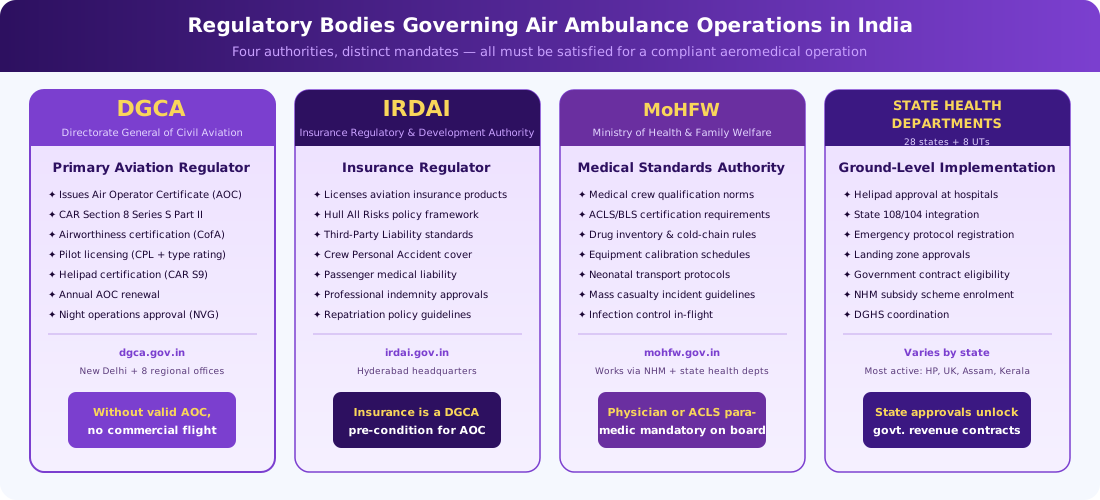
Unlike road ambulances — regulated entirely by state transport and health departments — air ambulances fall under a layered federal framework. Each regulator governs a distinct dimension of operations, and all four must be satisfied simultaneously before a single commercial mission can legally depart.
DGCA (Directorate General of Civil Aviation): The primary aviation authority. Issues the Air Operator Certificate (AOC) and Certificate of Airworthiness (CofA), approves pilot licensing, certifies helipads, and grants night operations approval. CAR Section 8 Series S Part II is the specific regulation governing air ambulance operations.
IRDAI (Insurance Regulatory and Development Authority of India): Licenses aviation insurance products used by operators. All hull, TPL, and crew insurance policies must be IRDAI-compliant. DGCA will not accept an AOC application without valid insurance proof — making IRDAI the indirect gatekeeper to your operating licence.
MoHFW (Ministry of Health and Family Welfare): Sets standards for on-board medical crew qualifications, drug inventories, equipment calibration, and infection control protocols. Works through the National Health Mission and state health departments for on-ground implementation.
State Health Departments: Handle helipad approvals at hospitals, emergency protocol registration, integration with 108/104 ambulance networks, and eligibility for government NHM subsidy contracts. States most active in air ambulance governance include Himachal Pradesh, Uttarakhand, Assam, and Kerala.
The Air Operator Certificate (AOC): The Master Licence
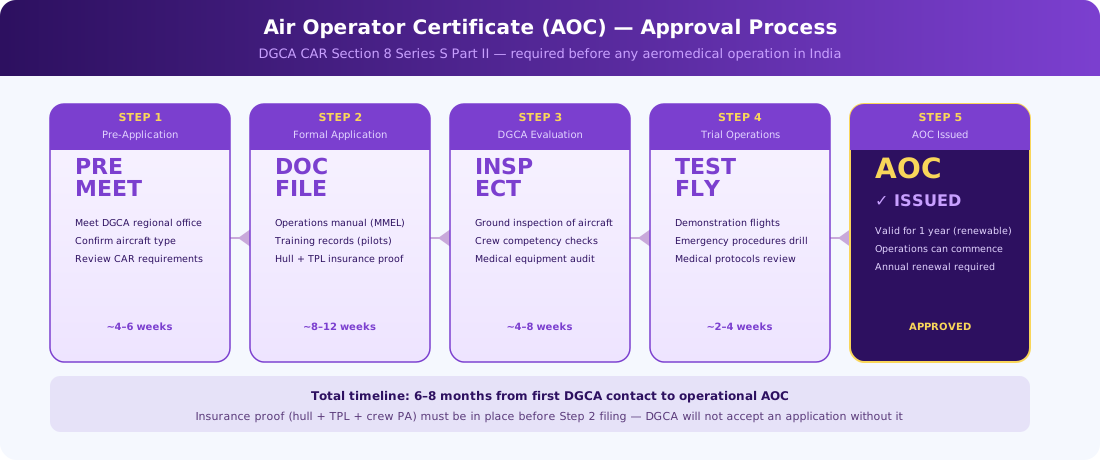
Every air ambulance operator in India — whether running a single helicopter or a fleet of fixed-wing aircraft — must hold a valid DGCA Air Operator Certificate issued under CAR Section 8 Series S Part II. The AOC is annual, non-transferable, and aircraft-specific. An operator who adds a new aircraft must amend the AOC before that aircraft flies a commercial mission.
The five-step AOC process typically takes 6–8 months from first DGCA contact to operational approval. The key documents required at the formal application stage (Step 2) include:
Operations Manual (OM): Documents flight procedures, emergency protocols, crew duties, maintenance schedules, and route planning. The DGCA expects this to be modelled on the Master Minimum Equipment List (MMEL) published for each aircraft type.
Training Records: Pilots must hold a valid Commercial Pilot Licence (CPL) plus an instrument rating and type rating for the specific aircraft. Night operations require NVG (Night Vision Goggle) training and a separate endorsement.
Insurance Proof: Hull All Risks, Third-Party Liability (minimum limits per DGCA schedule), and Crew Personal Accident policies must be in place at Step 2. This is the most common reason applications stall — operators try to obtain insurance after filing, but DGCA requires policies before it even opens the file.
Aircraft Maintenance Records: The CofA must be current. If the aircraft is on lease, the lessor's consent and the sub-lease approval from DGCA are additionally required.
Mandatory Compliance Checklist
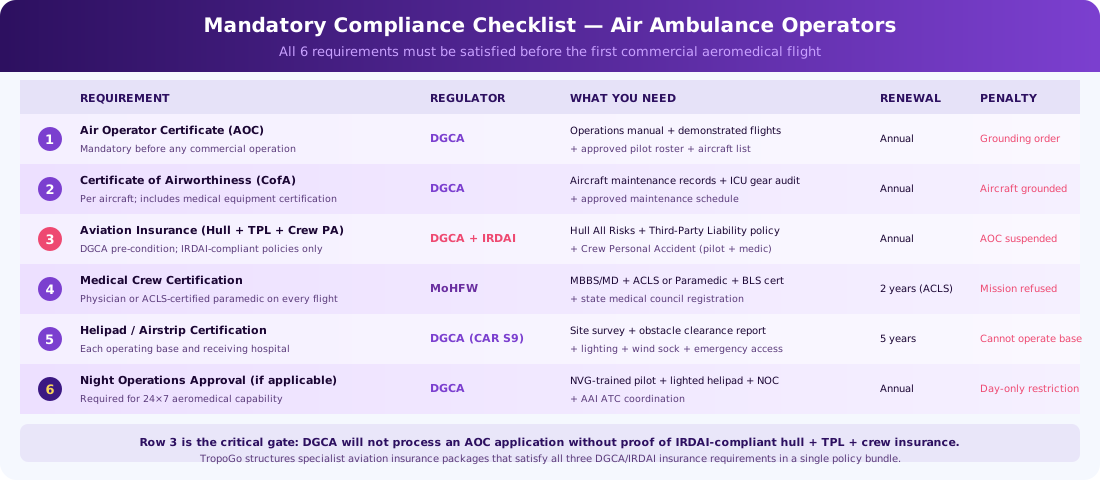
Beyond the AOC, air ambulance operators must maintain six ongoing compliance requirements. Any lapse in any one of these can trigger a DGCA ground order, suspension of the AOC, or refusal to accept a mission by the receiving state health authority.
Three of the six requirements have insurance at their core: the AOC cannot be obtained without insurance proof; the CofA renewal is incomplete without a current hull policy; and crew personal accident cover is required for every flight crew member before any mission can legally depart. This is why operators who treat insurance as an afterthought consistently fail DGCA inspections.
Medical Crew Standards Under MoHFW
The minimum medical crew requirement for an air ambulance mission in India is one physician (MBBS or higher) or one ACLS-certified paramedic, depending on the patient's clinical status and the distance of the mission. For neonatal transfers, a dedicated neonatal nurse or consultant is required. For intensive care transfers, a physician with ICU experience is the DGCA-accepted standard.
ACLS (Advanced Cardiovascular Life Support) certification: Must be current (2-year renewal cycle). Issued by accredited bodies such as the American Heart Association Indian chapter or equivalent MCI/NMC-recognized programmes.
BLS (Basic Life Support): Required for all ancillary staff on board, including flight paramedics assisting the primary physician.
Drug inventory: MoHFW guidelines specify a minimum drug kit: airway management drugs (propofol, ketamine, succinylcholine), cardiovascular agents (adrenaline, amiodarone, atropine), and emergency reversal agents. Cold-chain drugs must be stored in DGCA-approved temperature-controlled containers.
Equipment calibration: All portable ICU equipment (ventilators, cardiac monitors, defibrillators, infusion pumps) must have current calibration certificates from the manufacturer or an accredited biomedical engineering facility.
Helipad Certification: CAR Section 9
Every operating base and every receiving hospital that regularly accepts helicopter ambulances must hold a DGCA helipad certification under CAR Section 9 Series C Part I. The certification requires a site survey for obstacle clearance, load-bearing capacity assessment, lighting (for night operations), a functional wind sock, emergency vehicle access, and a written emergency response plan.
In practice, most major tertiary hospitals in metros — AIIMS Delhi, Fortis, Apollo Hospitals, Kokilaben Dhirubhai Ambani Hospital in Mumbai, and Narayana Health Bengaluru — hold current DGCA helipad certification. District hospitals and smaller private facilities frequently do not. Air ambulance operators must pre-screen receiving hospitals before accepting missions and maintain an updated certified-helipad registry across their operating territories.
Insurance is a DGCA pre-condition — not an option. Is your policy AOC-compliant?
TropoGo's specialist air ambulance insurance satisfies all three DGCA/IRDAI requirements — hull all risks, third-party liability, and crew personal accident — in a single policy bundle structured for Indian aeromedical operators.
The Insurance Mandate: Why IRDAI Compliance Matters
Section 5 of the Aircraft Act 1934 and Rule 160 of the Aircraft Rules 1937 make third-party liability insurance mandatory for all aircraft operations in India. DGCA operationalises this mandate through the AOC application process: no insurance, no certificate. But the insurance requirements go well beyond the statutory minimum. A complete air ambulance insurance stack includes:
Hull All Risks: Covers the aircraft against accidental damage, total loss, and in-flight accidents. For a medically configured helicopter (typically ₹15–₹50 crore replacement value), this is the largest single premium component. The policy must specify the aircraft's DGCA registration and the approved operations manual.
Third-Party Liability (TPL): Covers bodily injury and property damage claims from third parties. DGCA minimum limits are prescribed by aircraft weight; specialist operators typically carry higher limits to protect against urban landing incidents.
Crew Personal Accident: Covers pilots, flight nurses, and paramedics for death, permanent total disability, and hospitalisation arising from aircraft accidents. This is a DGCA requirement for every crew member listed on the AOC.
Passenger Liability: Covers patients and attendants travelling on the aircraft — essential because patients in critical condition may deteriorate or die in-flight, and families may pursue liability claims against the operator or the medical crew.
Medical Professional Indemnity: Protects physicians and paramedics against liability for clinical decisions made during transport. This is a distinct exposure from aircraft liability and requires a separate policy line — one frequently overlooked by new entrants.
International Repatriation Cover: For operators conducting cross-border aeromedical evacuation, covers compliance with bilateral aviation agreements, ATC filing in foreign airspace, and IRDAI cross-border notification requirements.
TropoGo's air ambulance insurance is structured specifically to satisfy DGCA's AOC filing requirements and IRDAI's general insurance framework — including the certificate formats DGCA inspectors expect to see during spot checks.
Night Operations: The Premium Compliance Layer
India's mountainous terrain and the 24×7 nature of medical emergencies mean that night operations capability is increasingly a commercial requirement for air ambulance operators. DGCA grants night operations approval as a separate endorsement on the AOC, requiring NVG-trained pilots, a lighted and certified helipad at the base, and ATC coordination with AAI or the relevant airport authority for every night sortie.
Night operations significantly increase the insurance risk profile. Hull premiums typically rise 15–25% when night operations are included in the AOC scope, and some reinsurers impose sublimits or exclusions for mountain night flying. Operators must disclose their intended operations scope accurately to insurers — undisclosed night operations will void coverage in the event of a claim.
The Regulatory Outlook: What's Changing
Three changes are reshaping the compliance landscape for Indian air ambulance operators through 2026–28. First, the DGCA is rolling out a digital AOC management portal that will require real-time insurance certificate uploads with automated expiry alerts — eliminating the grace period operators previously enjoyed. Second, IRDAI's proposed aviation insurance circular will standardise minimum liability limits across all aeromedical operators, closing the current gap where some operators carry only the statutory minimum (insufficient for urban missions). Third, AIIMS and major NHM-funded state hospital networks are beginning to mandate air ambulance insurance pre-qualification as part of their empanelment criteria — meaning an uninsured or under-insured operator cannot bid for government contracts.
What is CAR Section 8 Series S Part II and why does it matter for air ambulance operators?
CAR Section 8 Series S Part II is the DGCA Civil Aviation Requirement that specifically governs commercial air ambulance operations in India. It sets out the AOC framework, aircraft and crew standards, operations manual requirements, and the insurance conditions that operators must satisfy. Every air ambulance operator — helicopter or fixed-wing — must comply with this regulation before flying a commercial mission.
How long does it take to get an air ambulance AOC in India?
The end-to-end AOC process typically takes 6–8 months from the initial pre-application meeting with the DGCA regional office to the issuance of the certificate. The most common delays are incomplete insurance documentation at Step 2, aircraft airworthiness discrepancies found during the Step 3 inspection, and operations manual revisions required by DGCA reviewers. Having IRDAI-compliant insurance in place before submitting the formal application is the single most effective way to avoid delays.
Is insurance mandatory before applying for a DGCA air ambulance AOC?
Yes. DGCA requires proof of Hull All Risks, Third-Party Liability, and Crew Personal Accident insurance as part of the formal AOC application package (Step 2). Applications submitted without valid insurance certificates are returned unprocessed. The policies must be IRDAI-compliant and issued by a licensed general insurer or specialist aviation underwriter.
What medical qualifications does an air ambulance crew need in India?
At minimum, one physician (MBBS or higher) or an ACLS-certified paramedic must be on board for every mission. ACLS certification must be current (2-year renewal). For neonatal transfers, a neonatal nurse or consultant is required. For intensive care missions, a physician with ICU experience is the DGCA-accepted standard. All crew must hold BLS certification, and drug inventories must comply with MoHFW minimum kit guidelines.
Do hospitals need a DGCA certification to accept helicopter ambulances?
Yes. Any hospital that regularly receives helicopter ambulances must hold a DGCA helipad certification under CAR Section 9 Series C Part I. The certification requires a site survey, obstacle clearance clearance, lighting (for night ops), wind sock, emergency access, and an emergency response plan. Major tertiary hospitals in metros typically hold this certification; district hospitals frequently do not.
How does TropoGo's air ambulance insurance help with DGCA compliance?
TropoGo's specialist air ambulance insurance is structured to satisfy DGCA's AOC filing requirements in full — covering hull all risks, third-party liability, crew personal accident, and passenger liability in a single compliant bundle. Our team issues certificates in the formats DGCA inspectors expect, and we support annual AOC renewals with timely policy endorsements. Speak to our aeromedical insurance team to get your compliance package in place before your first DGCA meeting.
Regulatory compliance in India's air ambulance sector is non-negotiable — and insurance is the prerequisite that unlocks every other approval. Get your DGCA-compliant insurance in place before you file.